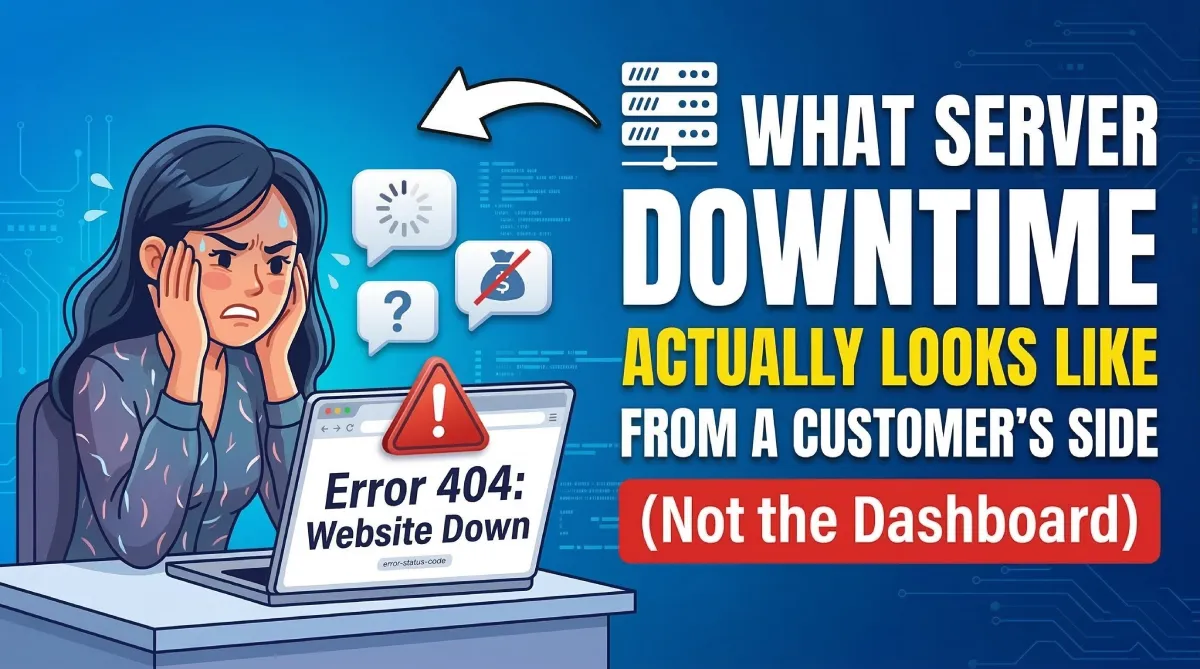
Aside from the occasional technical glitch, most people never give a second thought to the underlying infrastructure that supports all online activities until they experience downtime. What do customers see? Blank screens, failed payments, login difficulties, and delayed order confirmations occur when they experience downtime. Similarly, for businesses running nodes, especially those hosting applications using node server hosting, downtime is felt even more acutely due to the nature of real-time applications. Chats freeze, APIs fail to respond, and background jobs fail silently.
Customers get no details about CPU spikes or memory leaks. They only know that the service they relied upon has stopped working at that moment. That’s why, when selecting the cheapest hosting plans in India, it is essential to choose a reliable hosting provider so that, as a customer, your website witnesses little to no server downtimes.
What Customers See When Servers Go Down
From a customer's perspective, there is no forewarning when downtime occurs. A site takes longer to load, buttons are unresponsive, forms take forever to submit, or mobile apps hang on the loading screen. There is no alert banner for the user, and no explanation is given.
According to Google, page load delays as small as one second can reduce conversions up to 20%. When there is downtime, the delay can be infinite. Customers wait for the page to load, then decide to leave.
For e-commerce sites, the effects of downtime are immediately felt. A study by Gartner estimates that the average cost of IT downtime is $5,600 a minute. Customers may experience failed checkout attempts within minutes, along with an increase in support tickets from those trying to complete their purchases.
The Silent Damage to Customer Trust
Sales are not the only thing hurt by downtime. The frequent downtime incidents also erode trust without anyone being able to recognize their impact. Customers assume that there must be poor management, security issues, or instability.
According to Pingdom’s research report, users are 88% less likely to return to a given website after bad experiences. This bad experience can occur immediately upon downtime occurring.
SaaS platforms and applications hosted on a node server are affected even more severely than other types of platforms or applications, as consumers expect cloud services to be consistently available. Real-time features that no longer work create a void, causing customers to feel the disruption even more.
Dashboards Show Numbers. Customers Feel Delays
Hosting dashboards provide uptimes, server status, and logs of server errors. Customers see spinning loaders and error messages. The disconnect is serious.
An uptime rate of 99.9% means that a customer can expect downtime of almost 44 minutes a month. The problem is that when those 44 minutes occur, they are usually during the busiest times for the customers. They remember the downtime, not the average for the month.
Many businesses will also underestimate this gap when using the cheapest web host plans for India. They typically share their resources very aggressively with each other when using low-cost plans, which causes each customer to see slowdowns much sooner than the dashboard shows any warnings.
Downtime Feels Worse on Mobile Users
Users on a mobile device usually respond more quickly than web users to any problems. Slower connection speeds may lead to severe server-side issues. If a server takes longer than normal to respond to a mobile request, it can give the impression that the mobile app is not functioning.
According to Statista, 58% of global websites are accessed on mobile devices. For a mobile user, if the server is partially down, they would believe that the site is completely down.
The lack of proper scaling for Node.js applications can cause them to fail when there is an influx of users simultaneously requesting them. Therefore, it is critical to have a reliable node service provider to support customers and their services.
Support Teams See the Fallout First
Customers do not provide technical documentation. They use support channels to report issues. They post publicly to complain. And they leave bad reviews on sites like Yelp and Google.
According to Zendesk, 60% of customers will stop purchasing from a company after multiple negative experiences. The increased amount of downtime creates these experiences quickly.
The support teams have an overwhelming amount of requests when outages occur. The response times increase, and frustration builds up amongst customers. Trust is usually not restored once systems fail or recover.
Node Applications Amplify User Expectations
The Node.js user survey reports that the primary focus of production node environments is uptime and performance. The negative effects of downtime in these production environments generally feel more pronounced to customers due to their constant interaction with the system.
Node server-hosted applications provide dashboards, chat applications, application programming interfaces, and real-time data updates to end-users. Users expect prompt feedback when using these applications.
Concluding Insights
Server dashboards communicate only one aspect of the platform being used. A customer who is unable to access your business will often feel that they have been abandoned rather than experiencing a technical interruption.
A company that understands the difference between what it is saying (via its server dashboard) versus how customers feel (downtime) invests wisely. Companies that invest protect customer trust, visibility, and growth. The true cost of downtime is not measured in minutes of downtime, but rather by the number of lost customers.
Join the Movement
Explore the complete directory of Indian digital solutions at: