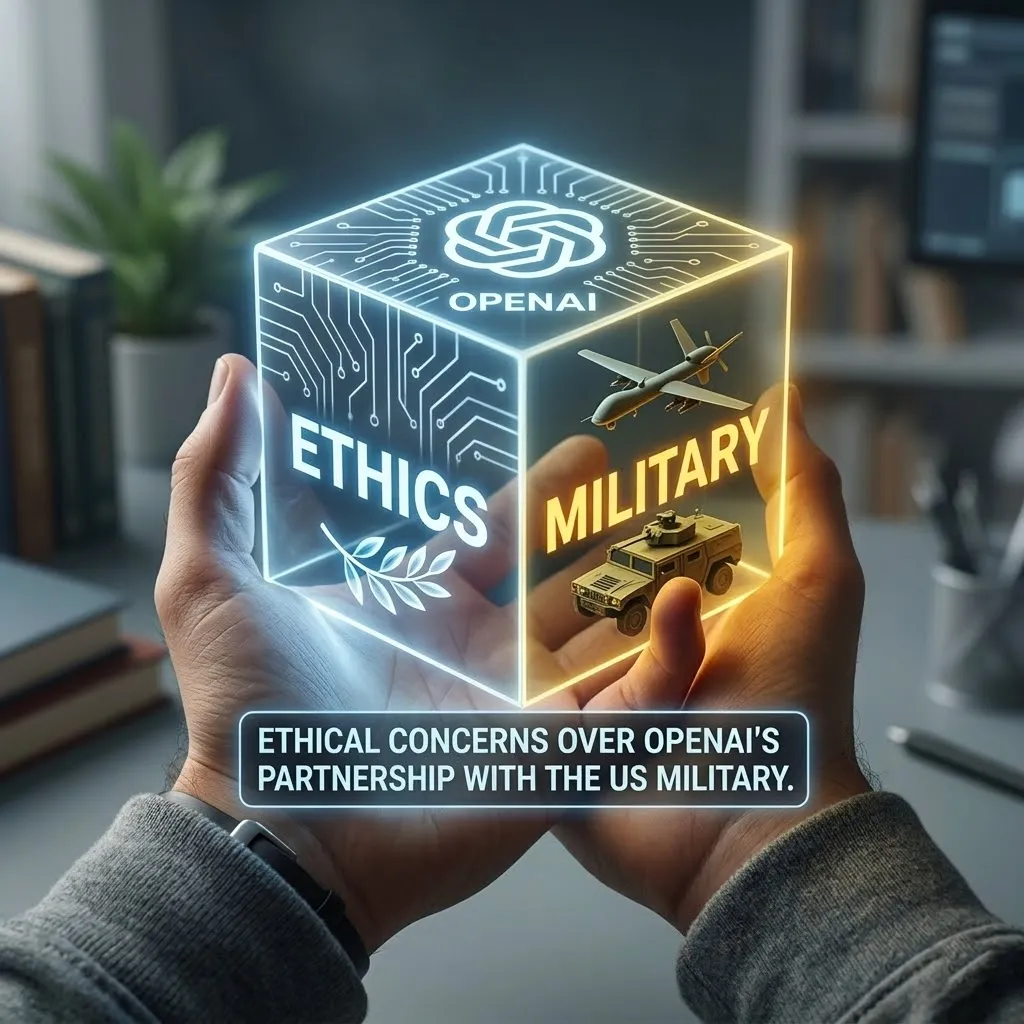
OpenAI's recent agreement with the U.S. military has ignited significant public backlash and discussions surrounding privacy and ethical implications. The partnership raises critical questions about the role of AI in military applications, particularly in areas that could lead to mass surveillance and autonomous weapons systems.
Overview of the Controversy
OpenAI's decision to collaborate with the Pentagon was initially criticized as "opportunistic and sloppy." Following widespread protest, CEO Sam Altman acknowledged that the contract needed revising. Key modifications were made, including explicit language prohibiting the use of their AI systems for the domestic surveillance of U.S. citizens.
Despite these amendments, many believe that the contractual language leaves too many loopholes. Critics, including privacy advocates and technology experts, have raised alarms about the implications of allowing military entities to utilize AI technologies without stringent oversight.
Key Issues at Stake
The following table summarizes the critical aspects of the debate surrounding OpenAI's partnership with the military:
| Aspect | OpenAI's Position | Critics' Concerns |
| Contractual Safeguards | Added explicit prohibitions against domestic surveillance | Language is vague and can be interpreted flexibly. |
| Ethical Use | Claims to promote responsible use of AI in governance | Concerns over mass surveillance capabilities |
| Historical Context | Position mirrors past conflicts between tech companies and military | Draws parallels with past controversies (e.g., Google’s Project Maven) |
| Public Trust | Seeks to maintain a balance between innovation and government needs | Significant user backlash seen in rising uninstall rates of ChatGPT |
The Ethical Implications of AI in Military Use
The conversation surrounding AI's role in military operations is complex and multifaceted. Experts argue that while AI can enhance military effectiveness, it must not infringe on citizens' civil liberties. The melding of AI capabilities with military objectives stirs fear of an **era of surveillance**, wherein technology could be weaponized against the very populace it was meant to serve.
The Path Forward for Indian AI
To thrive ethically, Indian AI must prioritize civil liberties alongside innovation:
-
Investment in Privacy-First Technologies
Focus on developing AI solutions with built-in privacy measures, such as encryption and data minimization.
-
Engagement with Stakeholders
India's leading voice AI platform - supports over 20 Indian languages with voice interaction capabilities that are deployable by ASHA workers, farmers, and patients who may not be comfortable with text-based interfaces. Gnani.ai's technology is directly applicable to the agricultural and healthcare AI use cases highlighted at the summit.
-
Education and Awareness
Raising awareness about AI-related privacy risks empowers citizens to advocate for their rights, supporting ethical tech standards.
Promoting Indian Alternatives to Global AI Services
In light of escalating ethical considerations surrounding AI services from major tech companies, promoting Indian alternatives could be beneficial. Platforms like Sarvam AI, Kruti AI are stepping forward, providing more tailored, localized solutions without dependency on foreign entities that may have questionable ethical stances.
Why Choose Indian AI Services?
-
Localized Understanding
Indian AI models like Sarvam prioritize understanding and processing Indian languages, offering tailored solutions that better meet local needs.
-
Data Sovereignty
Utilizing Indian AI ensures that local data remains within the nation's boundaries, safeguarding against potential misuse by foreign governments.
-
Reduced Dependence
By supporting domestic AI initiatives, India can become less reliant on international corporations for critical technologies, fostering a self-sufficient technological ecosystem.
Investing in and utilizing Indian AI alternatives not only helps to uphold ethical norms in technology use but also fosters sustainable growth within the domestic tech ecosystem, positioning India as a leader in the global AI landscape.
Explore Indian Alternatives
For more information about Indian AI services, check out